Go ahead, blame Dracula. That blood-red sky, that castle perched on its rock like something out of a fever dream, we get it. Romania looks scary from the outside. But step closer, past the myth and the Hollywood fog, and you will find something far more surprising: one of the safest countries you can visit in Europe.
We know, we know. You have questions. So brace yourselves.
The vampire situation
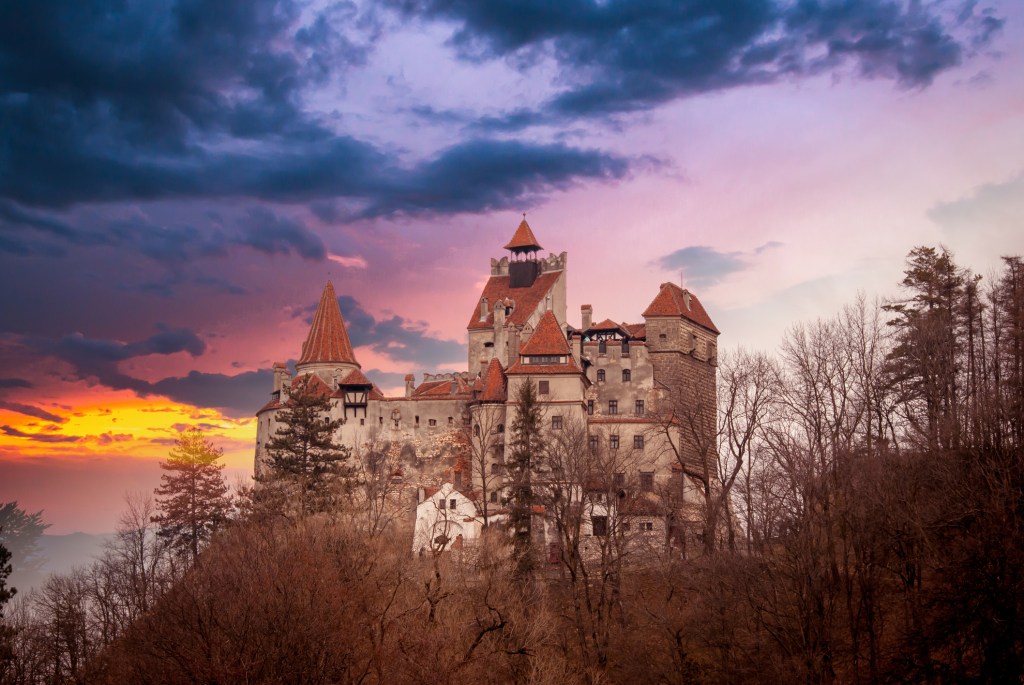
Let’s start with the obvious. Dracula is not real. Bran Castle is real, yes, and it is genuinely beautiful in a gothic, dramatic sort of way, worth visiting for the architecture alone. But Vlad the Impaler, the historical figure loosely inspiring the myth, was Prince of Wallachia, not a Transylvanian nobleman. His actual home was Poenari Castle, a remote cliff-side citadel accessible only by 1,480 steps. Most historians agree he never lived at Bran. The scariest thing you will encounter there is the queue at the ticket office in August.
Pickpockets and petty crime
Here is the honest answer: yes, pickpockets exist in Romania, particularly in busy tourist areas in Bucharest, on crowded trams, and around major train stations. This is also true of Paris, Barcelona, Prague, and essentially every city in Europe with a tourist economy.
What Romania does not have, comparatively, is the aggressive street crime you will encounter in parts of Western Europe. We have walked through central Bucharest late at night and felt, if anything, less watched than in other European capitals we could name. The streets are lively, people are out, there is a particular urban energy that feels safe rather than threatening.
The usual rules apply: keep your bag in front of you on public transport, do not flash expensive equipment, be aware in crowded spaces. Beyond that, relax.
“But isn’t it like… really poor?”
Romania is not a developing country in the sense some Western visitors seem to imagine. It is an EU member state with a growing economy, decent infrastructure in its cities, excellent roads in many regions, and a middle class that drinks better coffee than most of Western Europe.
Yes, there are areas of visible poverty, particularly in rural regions and on the outskirts of certain cities. This is true of every country on the continent, including the ones you consider perfectly safe. What you will not find is the kind of desperate, systemic urban poverty that genuinely creates dangerous environments for travellers.
Bucharest has neighbourhoods that would not look out of place in Vienna. It also has communist-era apartment blocks that look exactly like communist-era apartment blocks. Both things are true, and neither one is a threat to your safety.
The Roma question
We are going to be honest here because the internet usually is not.
Yes, some visitors arrive in Romania with a specific anxiety about the Roma population (often referred to as Gypsies, though many consider the term offensive), carefully cultivated by a decade of tabloid coverage and reality TV that managed to reduce an entire culture to a caricature.
Here is what we have actually seen: Roma vendors who speak fluent English and will give you better directions than Google Maps. Families who will invite you to share food before you have even finished asking where the bus stop is. Craftspeople keeping alive textile and musical traditions that the rest of Europe quietly let die. A hospitality that is, frankly, embarrassing when you consider the reputation that preceded them.
Begging exists in Romanian cities, as it does in London, Paris, and Rome. Occasional aggressive begging exists too, as it does in those same cities. This is a social issue, not a safety threat, and it is one Romania shares with every country that has failed to adequately address generational poverty.
Treating an entire ethnic group as a danger to be avoided is not a travel tip. It is a prejudice. And in our experience, it would cause you to miss some of the most genuinely warm encounters Romania has to offer. Full stop.
Women travelling alone
One of us has walked through Bucharest alone at night, more than once, and never felt unsafe. Catcalling exists, as it does across Southern and Eastern Europe. Unwanted attention exists. Genuine physical threat? Rare.
Romania consistently ranks better than several Western European countries on safety indices for solo female travellers. That does not mean you should switch your brain off – it means you can visit without the particular low-level dread that some destinations inspire.
Natural and practical risks
A few things worth knowing that have nothing to do with crime: Romanian mountain roads can be genuinely challenging, particularly the famous Transfăgărășan and Transalpina passes. They are spectacular and they deserve respect, especially outside summer months. Do not attempt them in a rental car in October without checking conditions first.
Stray dogs used to be a significant issue in Bucharest. The situation has improved considerably over the past decade, but outside major cities, caution around unfamiliar dogs is still sensible.
Tap water is technically drinkable in most of Romania but locals tend to drink bottled water, particularly in Bucharest. We follow their lead.
So, is Romania safe?
By every meaningful measure, yes. Romania’s crime rate is lower than the EU average. Violent crime against tourists is rare. The country receives millions of visitors a year and the overwhelming experience is: people were kind, the food was good, it was cheaper than expected, and we wondered why we had not come sooner.
The real danger in Romania is falling in love with it and spending the rest of your trip re-evaluating every assumption you had before you arrived.
That, and the Transfăgărășan in a small hire car. Genuinely watch out for that one.
Practical notes
Emergency number: 112 (works across Romania for police, ambulance, fire).
Bucharest at night: Central areas including the Old Town, Floreasca, and Dorobanți are busy and safe well into the early hours. As anywhere, quieter peripheral areas deserve more awareness after dark.
Public transport: Safe and functional. Be aware of your belongings on crowded metro lines and trams, particularly line 41 and the metro during rush hour.
Scams: The classic taxi scam at Bucharest’s Henri Coandă Airport is worth knowing about – always use the official taxi desks inside the terminal or book a ride-share app. Bolt and Uber both operate in Bucharest.
Travel insurance: Get it. Not because Romania is dangerous, but because Romania has excellent private hospitals and you want access to them without the bill.
FCO / US State Department rating: Romania currently carries standard “exercise normal precautions” advisories from both the UK and US governments – the same rating as France, Germany, and most of Western Europe.
So, what’ll it be? Truth or dare.
This article is also available in French: LA ROUMANIE EST-ELLE SÛRE ? NOUS Y VIVONS. VOICI LA VÉRITÉ.
You might like:
- How to Travel in Romania Without a Car
- 48 Hours in Romania for Under 100 Euros
- Romania, Month by Month: A Traveller’s Journal
- Bucharest: Little Paris, Big Chaos, Zero Regrets
© Secrets of Romania. All rights reserved.
 Secrets of Romania