Most people who come to Cluj-Napoca come for the music. Untold draws over 400,000 people every summer. Electric Castle, held 30 km away, at Bonțida, draws tens of thousands more. The festivals are real, they are extraordinary, and they are not what this article is about.
This is about what stays when the music stops.
A City That Has Always Been Two Things at Once
Cluj-Napoca has one of the more honest names in Romania. Cluj is its Romanian name. Napoca is its Roman name, appended in 1974 by Nicolae Ceaușescu in a gesture of nationalist archaeology. Kolozsvár is its Hungarian name, still used by a significant part of its population. Klausenburg is its German name, used by the Saxons who built much of its medieval core and then mostly left.
Four names. One city. All of them accurate.
This is the first thing you feel when you walk into Unirii Square: that you are somewhere that has been argued over, loved, and claimed by many, and that this tension, rather than flattening the place, has made it richer. The Gothic spire of Saint Michael’s Cathedral rises above the square, Catholic and medieval and enormous. Around it, the architecture is Austro-Hungarian, baroque, eclectic.
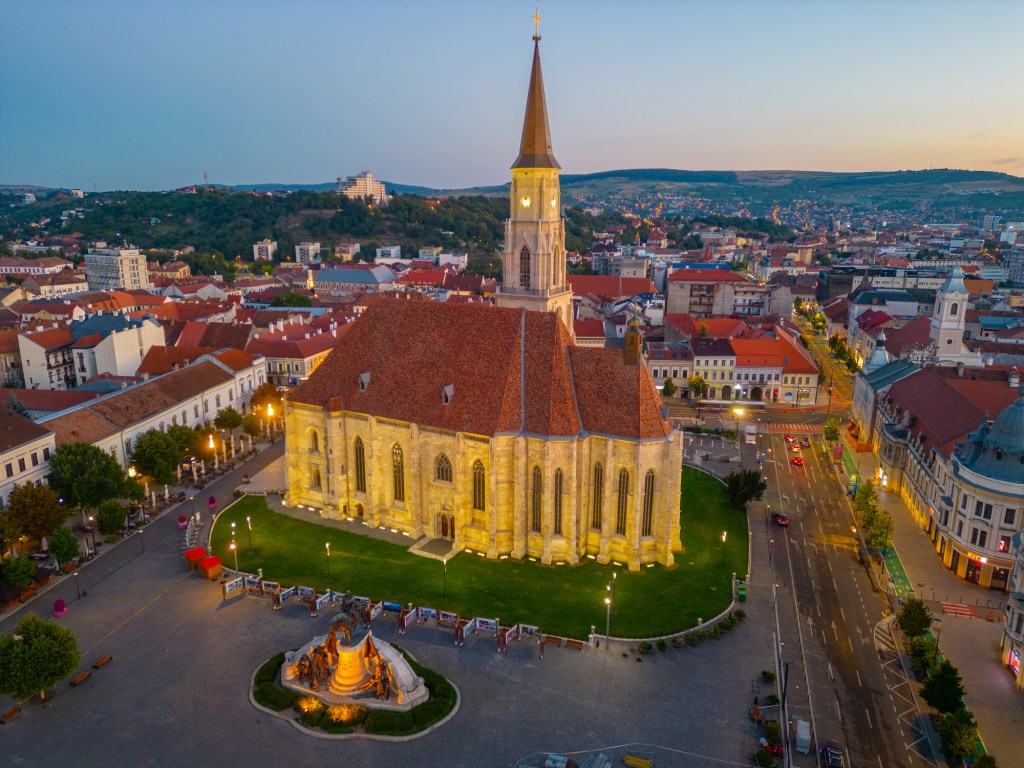
Below it, on any given afternoon, students sit on the steps with coffee, laptops, and cigarettes, talking in Romanian, Hungarian, and English in the same conversation.
Cluj is Romania’s second city by some measures, its first by others. It has the largest student population in the country relative to its size. It has a tech industry that punches well above its weight. It has a cultural scene, theatre, film, contemporary art, that makes Bucharest feel, occasionally, provincial. It also has medieval walls that most of its own residents walk past every day without looking up.
The Medieval City Nobody Mentions
There is a tower in Cluj-Napoca that most visitors never find.
The Tailors’ Tower – Bastionul Croitorilor – is what remains of the XV-century fortifications that once ringed the entire city. It stands at the edge of the old town, solid and indifferent, next to a statue of Baba Novac, the legendary captain who served Mihai Viteazul and was executed here in 1601. The plaque says he died bravely. The tower says nothing. It has been saying nothing for 600 years.
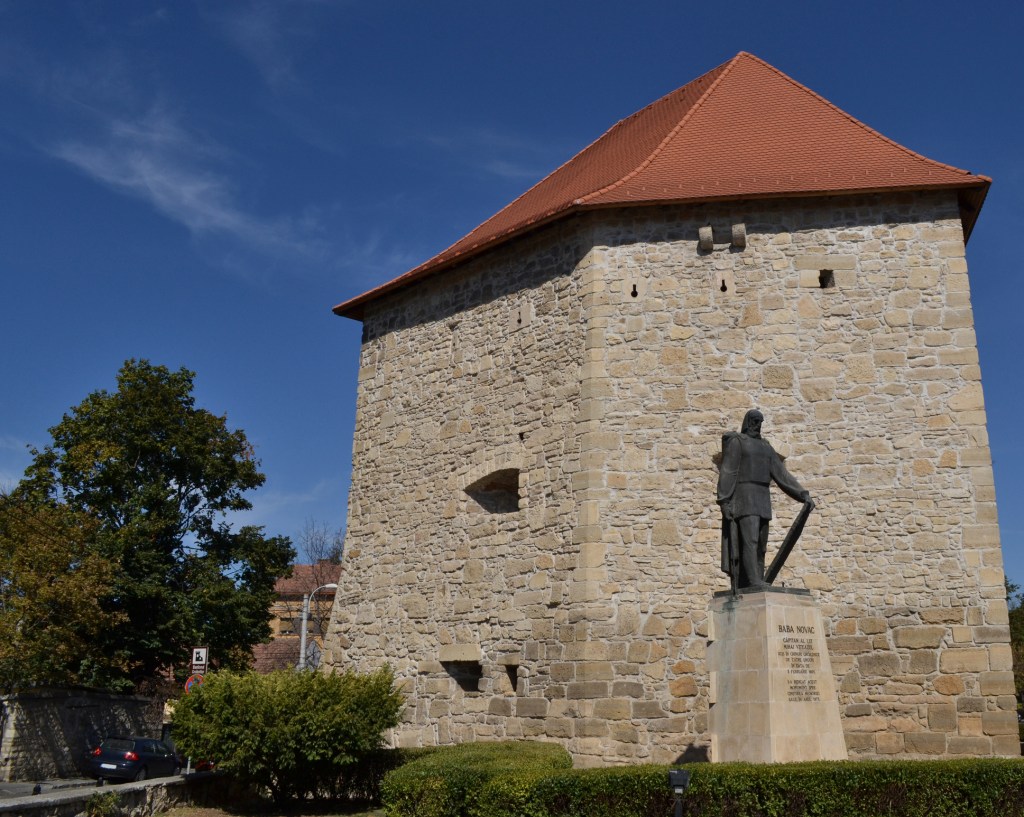
This is the Cluj that exists beneath the Cluj of festivals and tech startups and specialty coffee: a medieval city that was fortified, fought over, and survived everything the last six centuries threw at it. The Roman city of Napoca lies below the medieval one, archaeologists keep finding pieces of it whenever anyone tries to build anything new in the centre. Cluj has layers, and most of them are invisible unless you go looking.
Electric Castle and the Ghost at Bonțida
30 km north of Cluj, down a road that passes through villages where time moves differently, there is a castle that should not exist.
Bánffy Castle at Bonțida has been many things across the centuries. The Bánffy family received the estate as a royal donation in 1387 from King Sigismund of Luxembourg. Construction began in the sixteenth century in Renaissance style, and the complex was gradually expanded and embellished until it reached its final form in the mid-nineteenth century, a layered accumulation of Renaissance, Baroque, Rococo, and Neo-Gothic that earned it the nickname the Versailles of Transylvania.
Then came the twentieth century. During World War II, Nazi troops used the castle as a military hospital and warehouse. When they retreated, they set the northern wing on fire. The furniture, the artworks, the vast Bánffy family library – all looted. The convoys carrying the confiscated objects were later bombed, destroying everything they contained. After nationalisation, the communist state turned the grounds into an agricultural machinery station. Villagers took whatever was left.
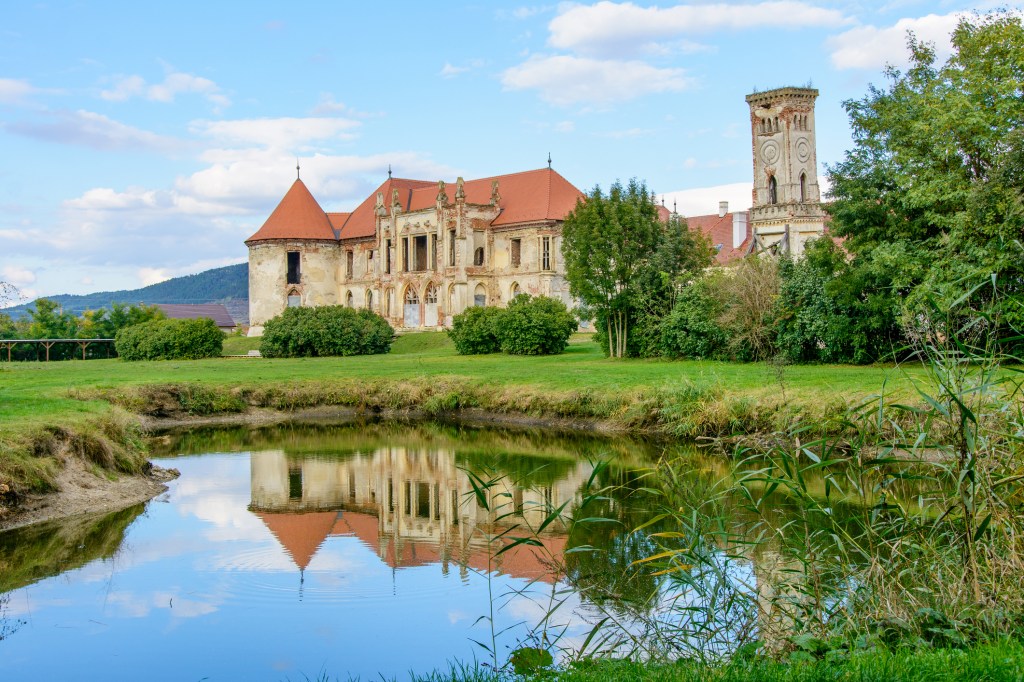
What remains is one of the most beautiful ruins in Eastern Europe: Gothic windows opening onto empty sky, Baroque facades slowly losing their battles with the ivy, a reflection in the pond that is somehow more complete than the building itself.
The City That Lives Beyond the Festival
The city’s café culture and nightlife are, frankly, very good… and that is not something Romania’s cities are always given credit for.
The area around Republicii Street and the streets behind Unirii Square fill up in the evenings in a way that feels genuinely European: not performed for tourists, not the aggressive neon of a resort town, but the natural density of a city where a significant percentage of the population is young, educated, and has strong opinions about coffee and natural wine.
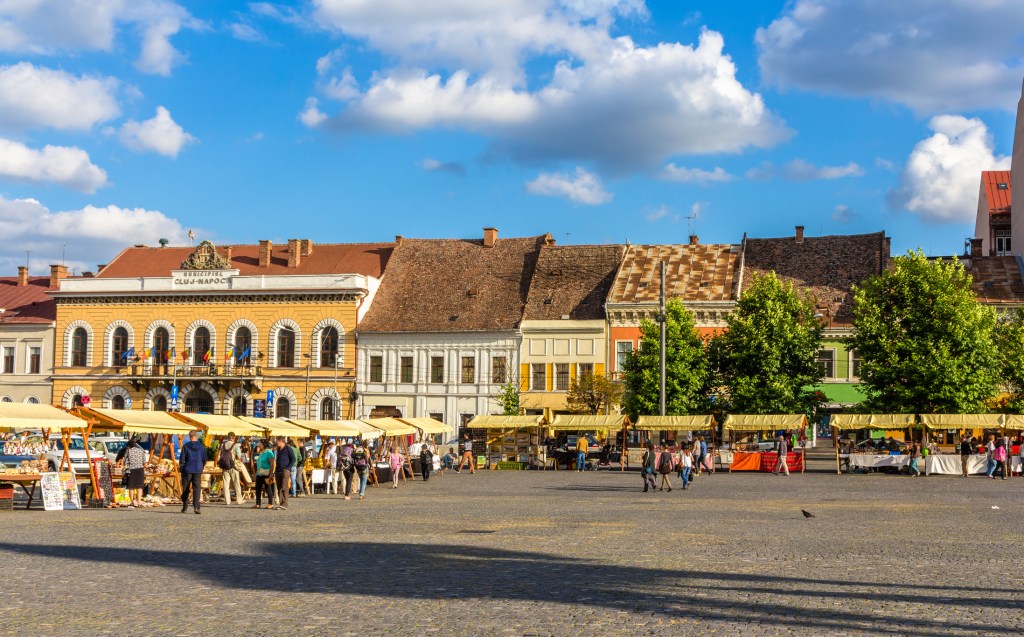
© Leonid Andronov | Dreamstime.com
The café culture here is real. Cluj was doing specialty coffee before most of Bucharest caught up. The bookshops stay open late. The theatres are taken seriously. The Romanian National Theatre of Cluj is one of the best in the country, and the Hungarian State Theatre next door (yes, Cluj has two national theatres, in two languages, in the same city) is one of the best in Central Europe.
This is what the festival crowds miss: a city that has a life of its own, independent of the hundreds of thousands who show up every August to stand in a field and watch international DJs.
Two Cultures, One City
Cluj-Napoca has a significant Hungarian minority – around 15% of the population, and this is not a footnote. It shapes everything: the bilingual street signs, the two theatre traditions, the different relationship to history, the particular tension that runs through the city’s politics and occasionally surfaces in its public life.
For the visitor, it mostly manifests as richness. Two culinary traditions. Two sets of festivals and cultural institutions. Two ways of understanding the same medieval square. Cluj is the place in Romania where you most feel the complexity of Transylvania’s history,not as a problem to be solved, but as a texture, a depth, a reason the city feels more substantial than its size should allow.
Practical Information
Getting there: Cluj-Napoca has an international airport with direct connections to many European cities. By train from Bucharest, allow approximately 9 to 10 hours; by car, approximately 5 hours on the A3 motorway.
When to go: Cluj is worth visiting year-round. Untold festival takes place in late July/early August. Electric Castle at Bonțida typically takes place in mid-July. Outside festival season, the city is quieter and easier to navigate.
Unirii Square: The heart of the old town. Saint Michael’s Cathedral is open daily; check locally for visiting hours. The square hosts regular markets and events throughout the year.
Tailors’ Tower (Bastionul Croitorilor): Free to visit from the outside. Located on Bulevardul Eroilor, a short walk from Unirii Square.
Bánffy Castle at Bonțida: Open to visitors outside of festival season. Approximately 30 km from Cluj-Napoca. Entry fees and hours vary; check locally before visiting. The drive through the Transylvanian countryside is part of the experience.
Where to stay: The old town area offers the most walkable base. Cluj has a range of accommodation from boutique hotels to well-reviewed hostels.
Getting around: The old town is compact and best explored on foot. For Bonțida, a car is recommended, though some organised tours operate from the city.
Cluj-Napoca does not need your festival to justify itself. The festival is a reason to come. The city is a reason to stay.
Romania is worth the detour.
This article is also available in French: Cluj-Napoca
You might also like:
- Brasov, Romania: The City Where Every Square Feels Like a Holiday
- Botoșani and Ipotești: A Literary Pilgrimage in Romania
- Vama Veche: The Bohemian Pearl of the Black Sea
© Secrets of Romania. All rights reserved. Unauthorised reproduction prohibited.
Cover photo by © Joyfull | Dreamstime.com
 Secrets of Romania