
Most people who plan a trip to Romania have Transylvania on their list. Bran Castle, Sighișoara, Brașov. The usual circuit. What most of them miss, and what most Romanians outside the region also tend to overlook… is that one of the most distinct and quietly extraordinary parts of the country sits further north, in a county where the signs are in two languages, the food follows different rules, and the landscape feels like it belongs to a different century entirely.
Harghita has just been named Europe’s Region of Gastronomy for 2027. It is the kind of recognition that makes you stop and think about what you actually know about the place.
The answer, for most people, is not much.
Harghita is a Székely county, part of the Székely Land, the historically Hungarian-speaking region of central Transylvania. Around 85% of its population is ethnic Hungarian. The language you hear in markets, in restaurants, in village squares is Magyar. The traditions, the architecture, the food. All of it carries the weight of a culture that has existed here for centuries and has no particular interest in explaining itself to outsiders.
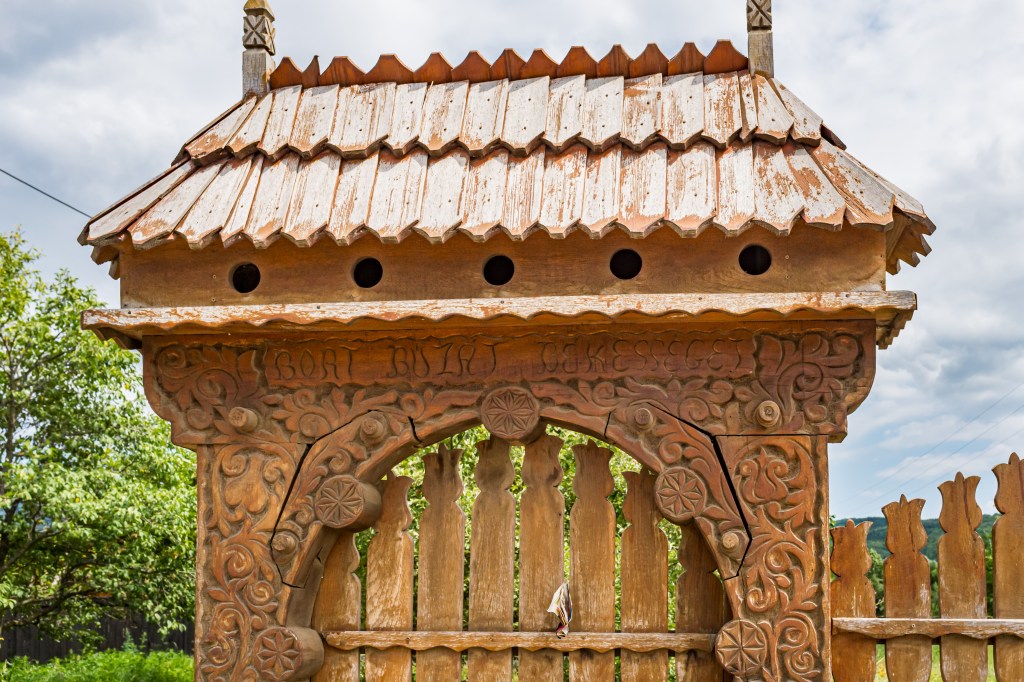
That is not unfriendliness. It is simply a place that has its own rhythm and is comfortable with it.
The gastronomy that earned Harghita this title is rooted in that same self-sufficiency. Kürtőskalács, the chimney cake cooked over open coals, dusted with sugar and walnut, is perhaps the most visible export, the thing you find at Christmas markets across Europe and somehow never tastes quite right outside of here. Lángos, stuffed cabbage, smoked meats, fresh trout from mountain streams, pálinka from small producers who have been making the same recipe for generations.
And water. Borsec, Romania’s most recognised mineral water, comes from this county, one of dozens of natural springs in a region so rich in mineral water that the IGCAT jury specifically noted it as remarkable by European standards. Food and drink that do not try to be anything other than what they are.
The region around Miercurea Ciuc, the county capital, sits at over 600 metres altitude. The winters are the coldest in Romania. The summers are short and green in a way that feels almost excessive, the kind of green that makes you understand why people chose to settle here and never left.
The Hășmașul Mare mountains frame the eastern edge of the county. The Harghita Mountains run through the centre. There are thermal springs, volcanic lakes, dense forests. The kind of landscape that rewards walking slowly and not having a plan.
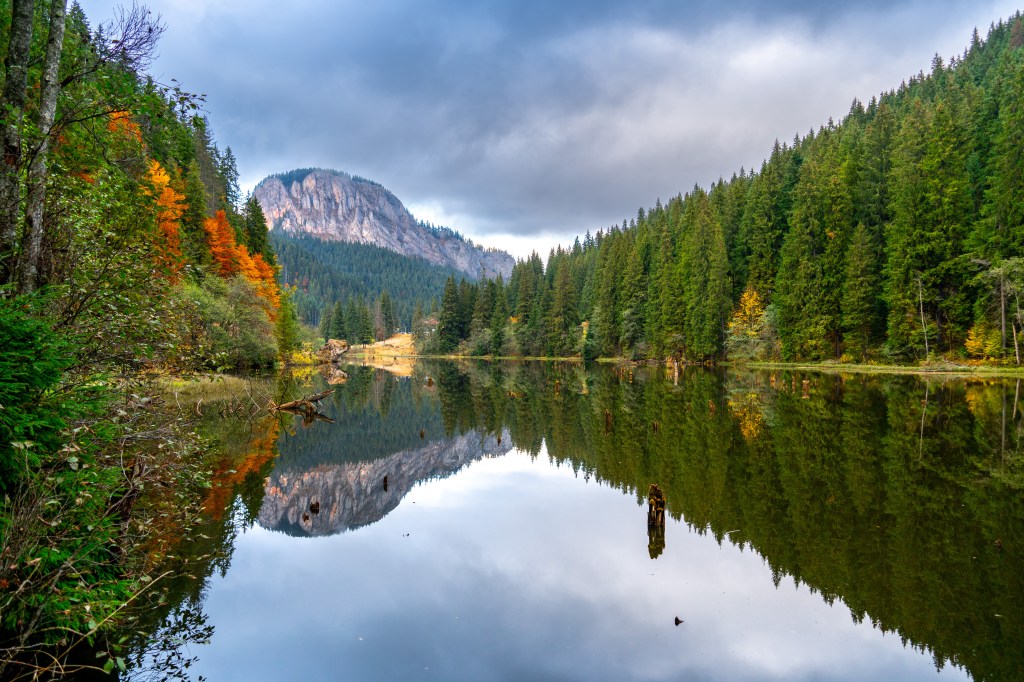
Lacul Roșu (the Red Lake) sits in the eastern part of the county, near the Bicaz Gorges, formed by a landslide in 1837 that dammed a mountain river and submerged a forest. The drowned tree trunks still emerge from the water. It is eerie and beautiful in equal measure, exactly the kind of place this blog exists to point people toward.
The European Region of Gastronomy title, awarded by IGCAT, is not a marketing prize. The candidacy process began in 2023 and involved an international jury visiting the region in October 2024, assessing not brochures, but living practice. It recognises regions with genuine, living food cultures: traditions passed down not as performance but as daily practice. Harghita earned it because the food here is still made the way it has always been made, in homes and small restaurants and market stalls, by people who learned from their grandmothers and see no reason to change.
Harghita is not the first Romanian county to receive this recognition. Sibiu held the title in 2019, a Saxon city with a different landscape and a different food culture entirely. That Romania has produced two European Regions of Gastronomy within a decade says something worth paying attention to, about a country whose culinary traditions remain largely undiscovered outside its own borders. For Harghita, 2026 is the year of preparation. 2027 is the year itself, a full calendar of festivals, cultural programmes and culinary events built around what the county already does, every day, without an audience. If you are considering going, now is the time to start planning.
Behind the title is a team. “Visit Harghita“, the intercommunity association that drives tourism development for the county, initiated the candidacy in 2023 and assembled a consortium of twelve local organisations to carry it forward. The groundwork had been laid long before that: in 2022, the county dedicated an entire year to gastronomy. In 2024, Harghita was named Destination of the Year in Romania. None of this was accidental. The IGCAT title is the result of people who understood what they had and decided, methodically and over years, to make the case for it.
Europe has many remarkable places. Harghita makes us proud that it exists.
You might like:
- Botoșani and Ipotești: A Literary Pilgrimage in Romania
- Sighișoara: The Mistake Almost Every Visitor Makes
- Hoia Baciu: The Forest That Romania Cannot Explain
© 2026 Secrets of Romania. All rights reserved.
Photos © Adobe Stock
 Secrets of Romania