
We wrote recently about Harghita’s gastronomy: the recognition, the kürtőskalács, the pálinka, the quiet pride of a county that has been feeding itself well for centuries without needing anyone to notice. But food was never the whole story… Hidden behind the forests and the volcanic ridges is a side of Harghita that has nothing to do with food at all, and almost everything to do with why people who live here never quite manage to leave.
Let’s picture this as chapters from an adventure movie.
🎬
The Lake
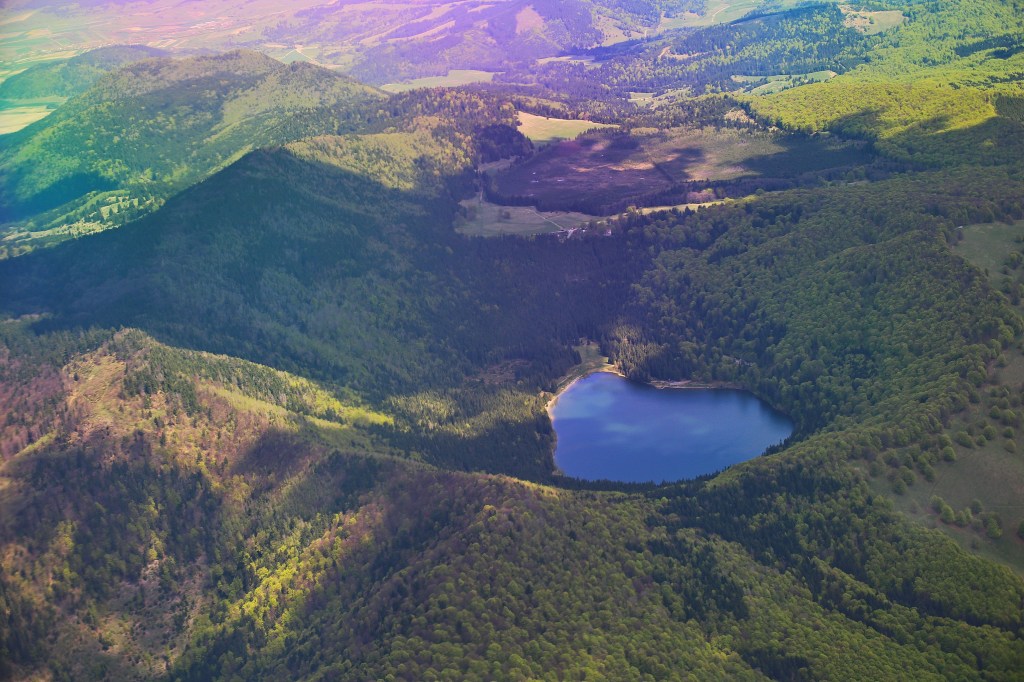
Tucked into the crater of an extinct volcano near Băile Tușnad, at 946 metres, Lacul Sfânta Ana fills itself slowly with nothing but rain and melting snow, no streams in, none out. A small chapel has stood on its shore since at least 1349, and the story locals tell is of a girl named Ana, whose tears are said to have shaped the basin itself. Standing at the water’s edge, looking at something that has quietly refilled itself the same way for thousands of years, it is hard not to feel a version of what the people here must feel: a kind of quiet pride that this still exists, mostly unbothered, mostly unphotographed. A short walk away, in the volcano’s twin crater, the Mohoș peat bog shelters plant life that has survived since the Ice Age, a strange, boggy little time capsule that most visitors to the lake never even know is there.
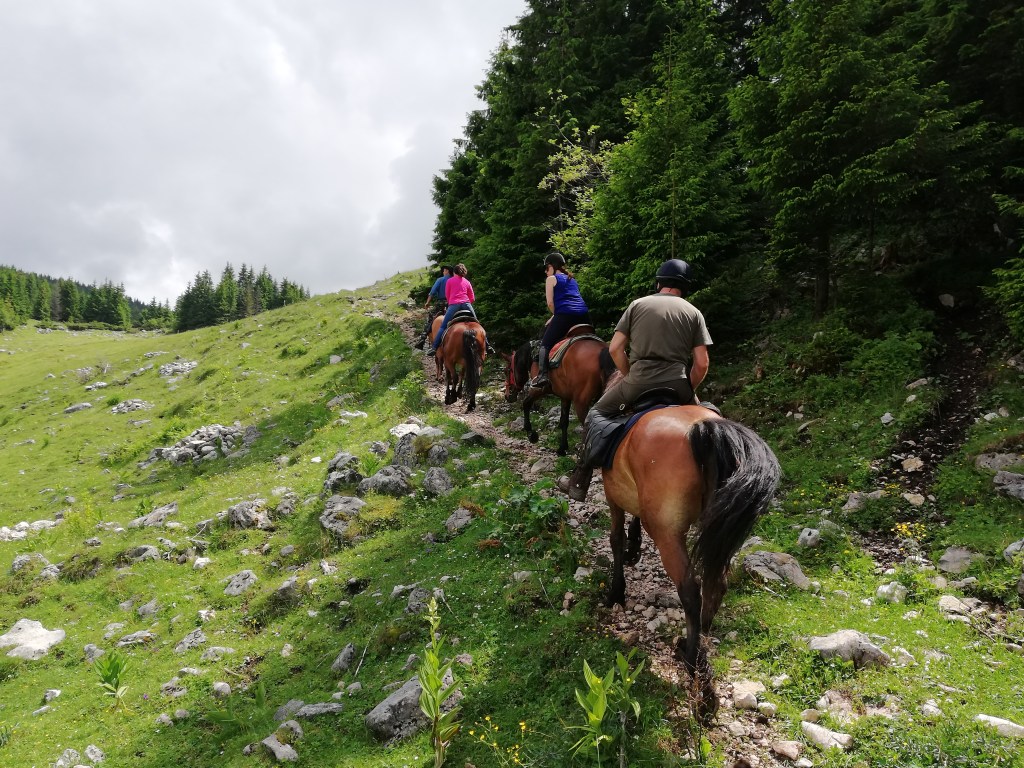
For those who would rather see the county from somewhere higher up and slower, the highland pastures above the forest line are still grazed and still crossed on horseback, much as they have been for generations. Riding out across open grassland with rock formations rising in the distance is not an organised spectacle. It is simply how some people here still get from one place to another, and visitors are welcome to come along for the ride, literally, through some of the emptiest and most beautiful high ground in Transylvania.
From Water to Stone
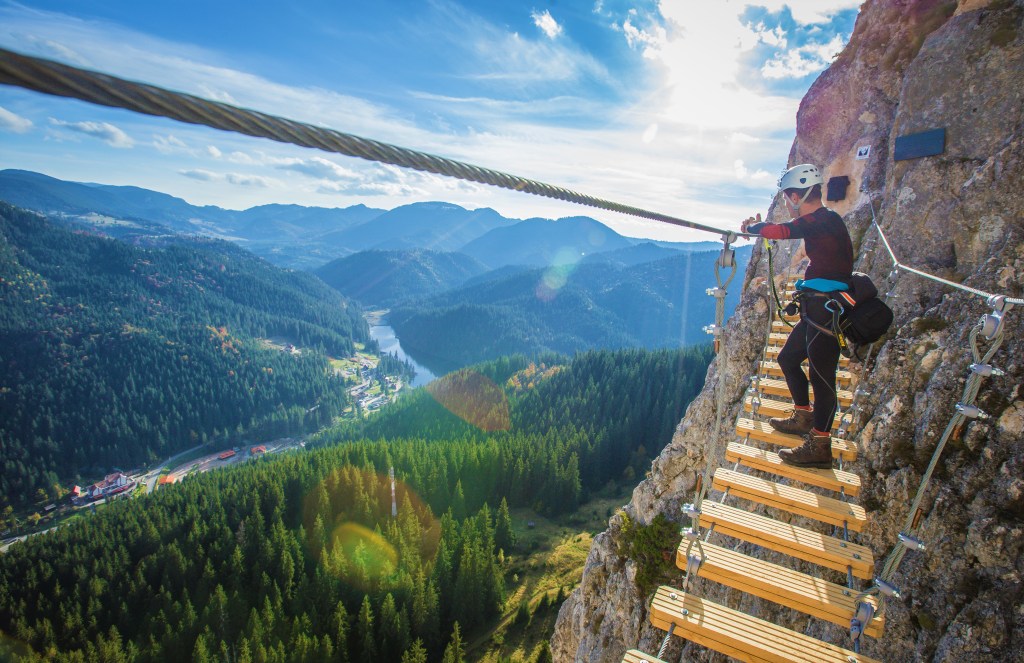
Further south, the landscape turns from water to stone. Where the Harghita Mountains meet the Perșani range, the Vârghiș stream has spent some 150 million years cutting through limestone, leaving behind more than a hundred caves and a gorge that takes four to six gentle hours to walk. Along the way, nine suspension bridges carry the path back and forth across the water, strung between rock walls that close in and then open out again, again and again, until you stop counting. Bring a torch if you want to look inside the caves; bring nothing in particular if you just want to walk.
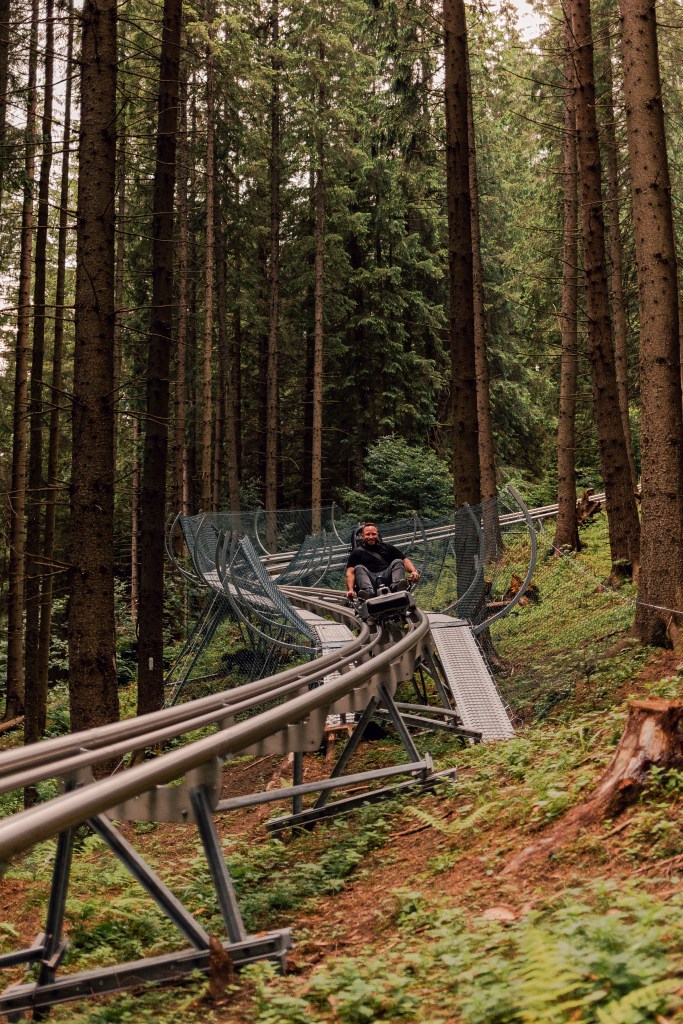
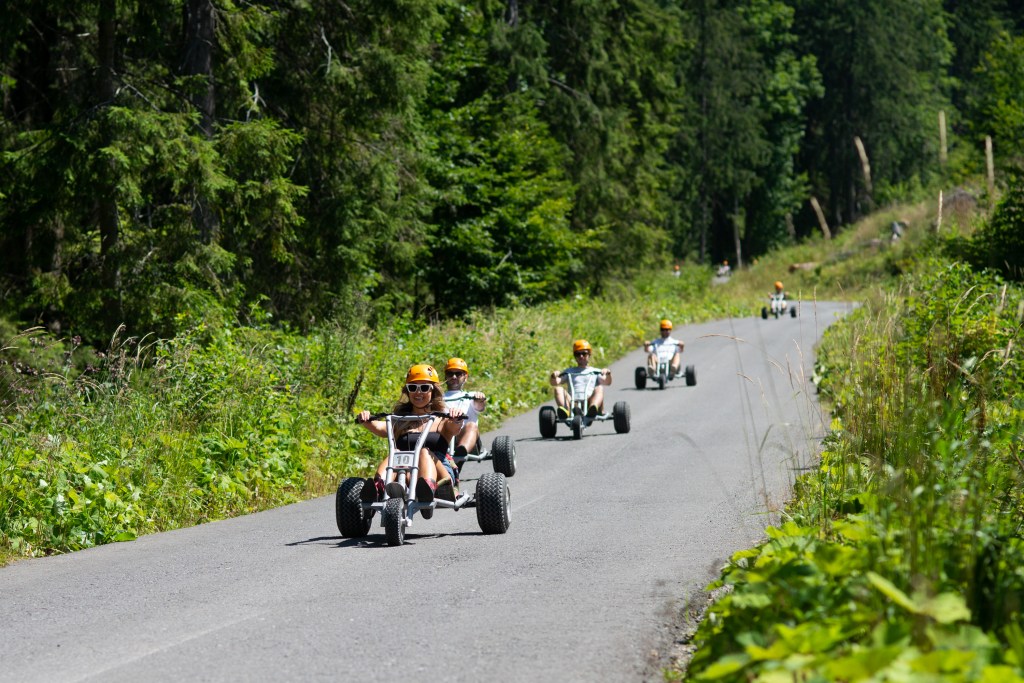
Speed, if that is what you are after, lives in the forests around Lacul Roșu and Toplița, where steel-railed alpine coasters now send sledges through the trees at up to 45 km/h, braking automatically so that no amount of enthusiasm can get you into real trouble. Nearly 2km long, the Toplița track is the longest in the country, threading views of the Călimani, Giurgeu, and Gurghiu mountains; the shorter one at Lacul Roșu, 940 metres, sits a short drive from the lake itself. Both operate year-round, and neither pretends to be anything more than what it is: a sledge, a rail, and a very good reason to be outside, whatever the season.
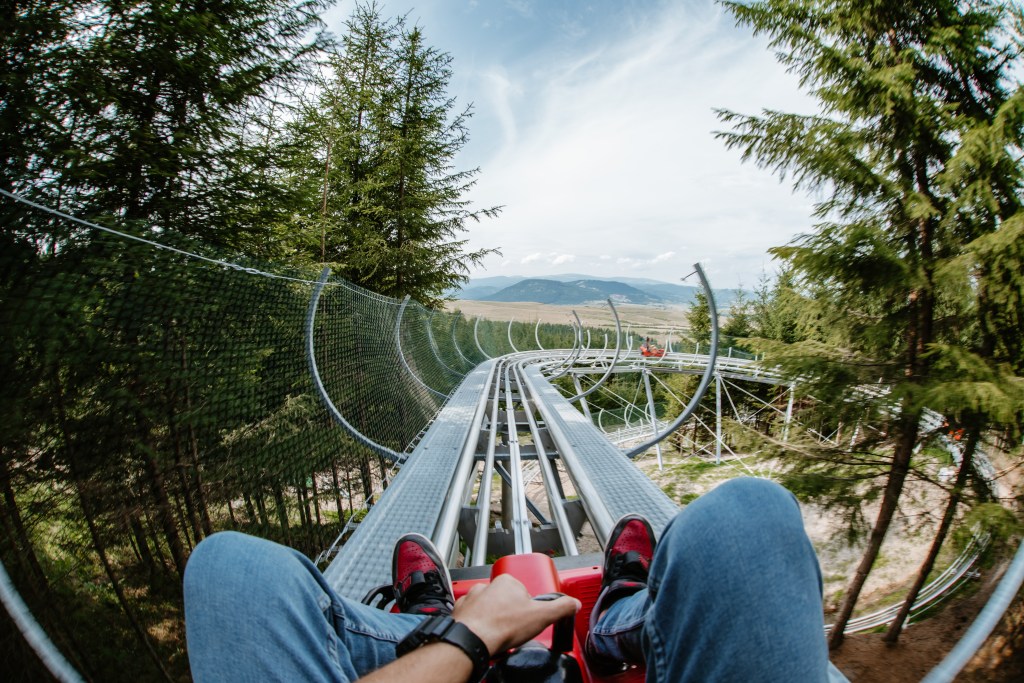
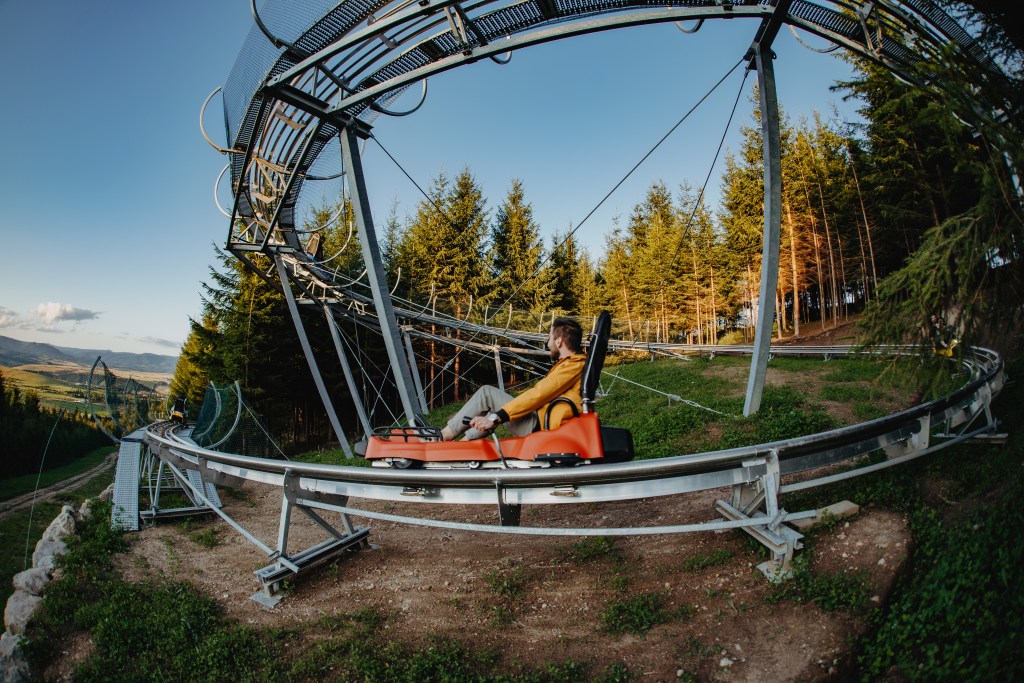
Photos: sebiberindean.ro, unvispufos.ro / courtesy of Visit Harghita
The Castle
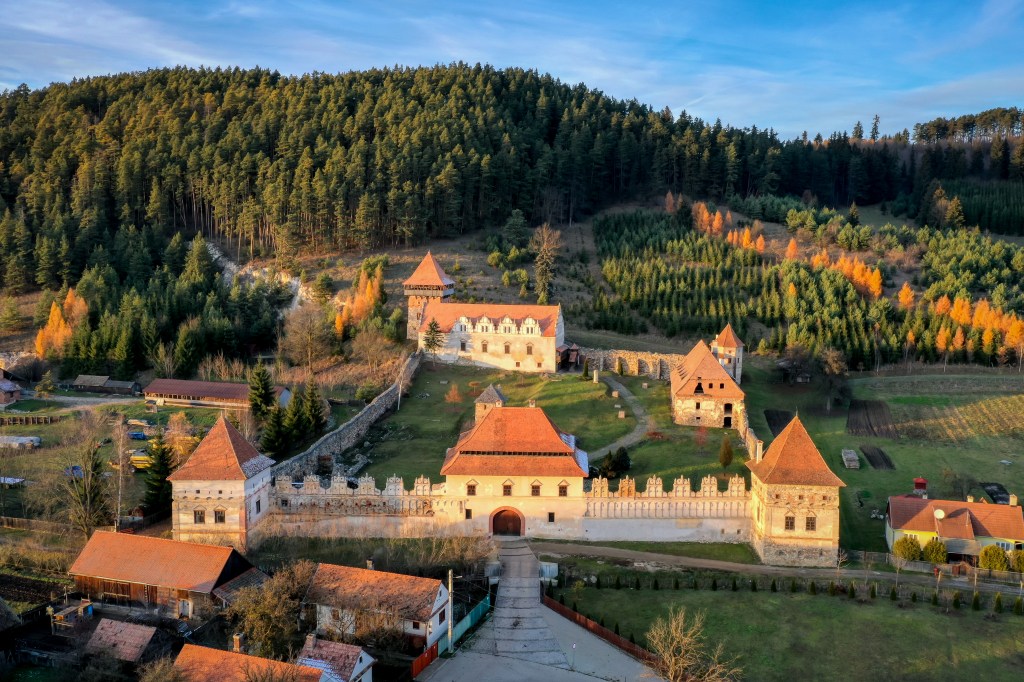
Further inland, near the village of Lăzarea, a Renaissance castle (Lázár Castle) has spent the better part of four centuries being burned down, abandoned, and slowly brought back. Its gate tower dates to 1532, enclosed by defensive walls in the 1620s by István Lázár, whose family was related by marriage to Prince Gabriel Bethlen – Bethlen is said to have spent part of his childhood here. The castle was burned by imperial troops in 1707, burned again in 1748, and burned a final time in 1872, after which it stood empty for so long that sheep were kept in its courtyard in the 1950s. Restoration began quietly in the 1960s, gathered pace through community efforts and an artists’ colony in the 1980s, and a long ownership dispute kept the gates closed for almost a decade. They reopened to the public in 2022.
The House of Butterflies
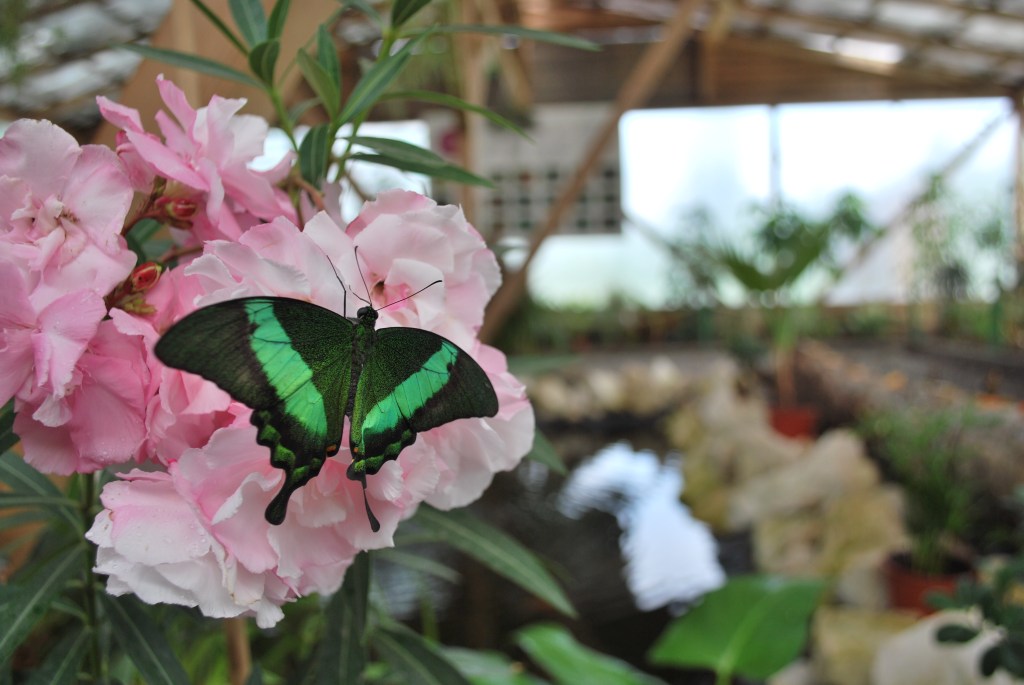
Near Praid, better known for its salt mine, the Butterfly House has been quietly running since 2012, the first permanent one of its kind in Romania: a warm, plant-filled room where tropical butterflies drift past at head height, open through the warmer months and popular with families looking for something gentler than a sledge run.
The Park
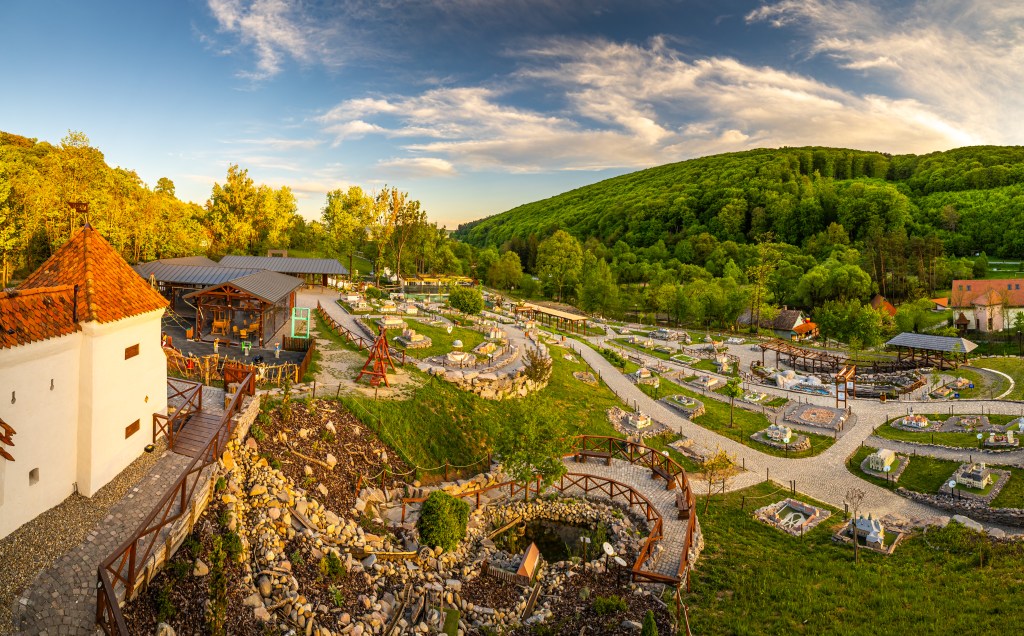
Near Odorheiu Secuiesc, the Mini Transylvania Park gathers more than ninety scale models of the region’s most significant buildings into a single afternoon’s walk, Transylvania shrunk down, all in one place. Right next door, eighteen giant robotic insects loom over the path at the Insect Park, twice the size of life and somehow more convincing for it.
The Statue
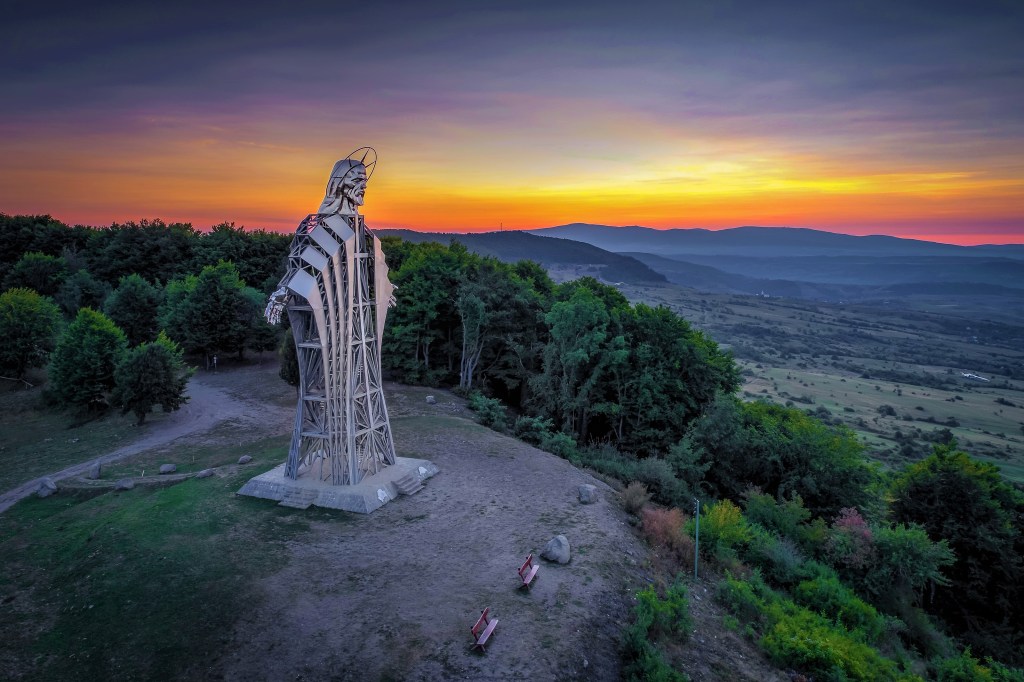
On Gordon Hill, between the two towns, twenty-two metres of steel rise into the shape of Christ, the tallest such statue in Eastern Europe, built in 2011 from donations collected by people who simply wanted it there. A spiral staircase runs up through the inside, and from the top, on a clear evening, the whole valley opens up below, the kind of view that makes the climb feel small by comparison.
None of this is meant to impress an audience. The lake fills because that is how it has always filled. The castle reopened in 2022 because people kept at it for decades, long before anyone was watching. Most of these places sit within an hour or two of each other by car, close enough to combine into a single loose, unhurried loop, and none of them require advance booking, special equipment, or much more than a free afternoon.
We went for the kürtőskalács. We stayed an extra day for the lake, and we’re still not sure which one we’ll remember longer.
© All photos courtesy of Visit Harghita
You might like:
© 2026 Secrets of Romania. All rights reserved
 Secrets of Romania