
There are beach towns, and then there is Vama Veche at the Black Sea, in Romania.
Tucked into the country’s southernmost tip, just a few meters from the Bulgarian border, this small village has been quietly resisting the march of modern tourism for decades. No high-rise hotels. No all-inclusive resorts. No crowds wearing matching wristbands. Just sand, sea, and a spirit that refuses to be tamed.
Romanians have known about Vama Veche for generations. During communism, it became a quiet refuge for artists, intellectuals, and anyone who needed to breathe freely. That energy never left. It settled into the sand, seeped into the walls of the bars, and wrapped itself around an old piano someone once dragged onto the beach.
That piano is still there.
A place that lives by its own rules
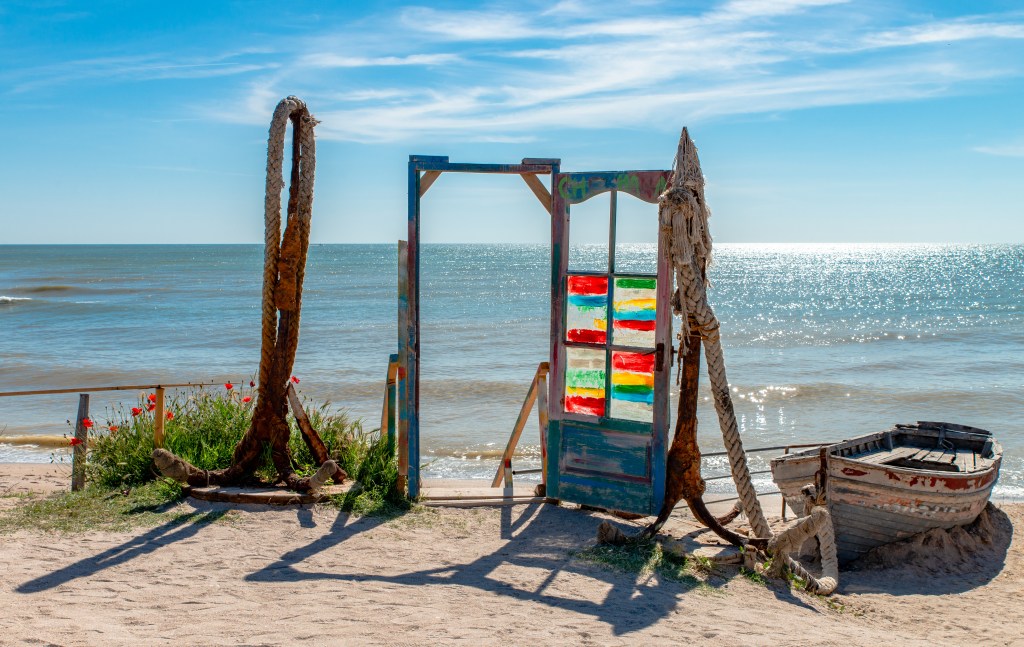
Walking into Vama Veche feels like stepping into a place that missed a few decades on purpose. Wooden beach bars with straw roofs. Hand-painted doors standing in the sand for no reason other than beauty. Fishing boats rotting poetically beside them. The Black Sea stretching wide and grey-green beyond it all.
In summer, the village fills with musicians, backpackers, and Romanians who have been coming here since they were teenagers. Fires burn on the beach at night. Someone always has a guitar. The conversations last until morning.
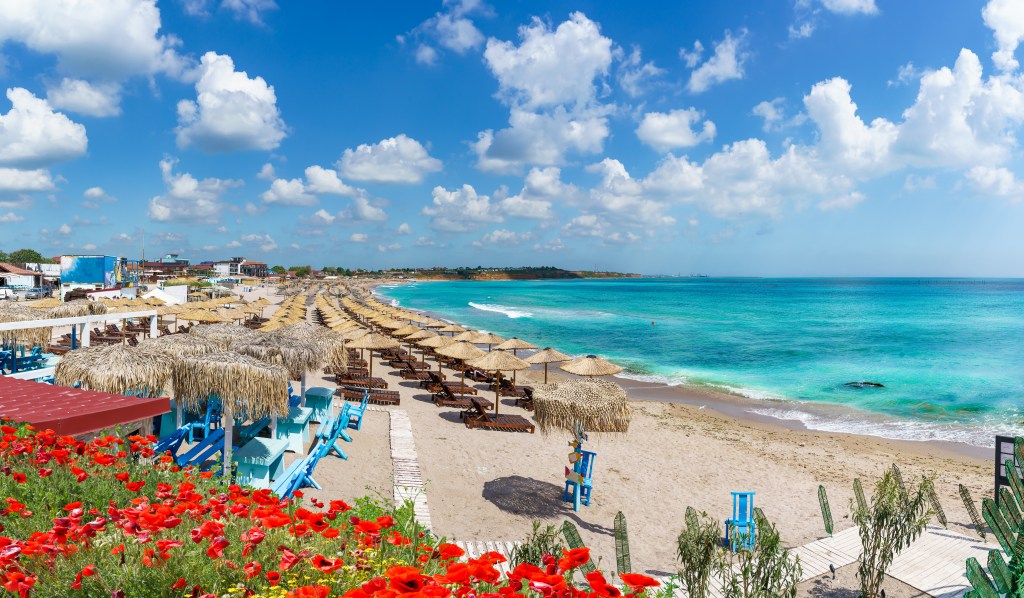
Vama Veche is not polished. It is not trying to be.
What makes Vama Veche different
Most of Romania’s Black Sea coast developed fast and hard in the post-communist years. Mamaia became a party resort. Eforie got big hotels. Costinești turned into nostalgia for sale.
Vama Veche said no.
The village imposed its own informal rules. Locals and regulars resisted overdevelopment with a stubbornness that, over time, became its greatest asset. What you find here today is genuinely rare on any European coastline: a beach that still feels like it belongs to the people on it.
One more thing worth knowing: Vama Veche has a nude beach, located about a kilometer south of the main strip. It has been part of the village’s free-spirited identity for decades. Nobody makes a fuss about it.
Where to eat
Vama Veche is not a fine dining destination, and that is precisely the point. The best meals here are eaten outside, at wooden tables a few meters from the water.
Look for a cherhana – a traditional Black Sea fish restaurant where the fish comes straight off the boats and onto the grill. Grilled carp, fried sprats, fish roe spread on thick bread. Simple, honest food that tastes exactly right in this setting.
Practical information
Vama Veche is located approximately 266 km from Bucharest, around 3 hours by car via E81. The route includes tolls. For those asking how to get to Vama Veche without a car, direct trains run from Bucharest to Mangalia, the nearest town, from where local transport covers the remaining distance.
Vama Veche is a summer destination. The village comes alive between June and September and is largely quiet, or completely closed, outside of that period. Plan accordingly.
The best time to visit is June or early September, when the weather is warm but the crowds are thinner. July and August are lively but busy.
Accommodation is mostly guesthouses and small hotels, with prices ranging from around 20 to 50 EUR per night depending on the season. Booking in advance is strongly recommended for summer.
For places to stay in the area, search hotels near Vama Veche on Booking.com.
© Secrets of Romania. All rights reserved.
 Secrets of Romania